


We may earn a commission when you purchase through affiliate links. Learn more.
Travel photography is a balancing act. You want the best possible image quality, but you also don’t want to be the person lugging a twenty-pound camera bag through the streets of Bangkok or up a trail in the Grand Canyon. After a decade of traveling with everything from tiny point-and-shoots to heavy full-frame beasts, I’ve learned that the “best” camera is the one that doesn’t get left in the hotel room.
Pro Advice: 3 Things to Do Before You Buy Gear
In my experience, photographers often buy a camera thinking it will solve all their problems. But as I noted in my 5 Pro Travel Tips guide, your gear is only as good as the preparation and knowledge behind it.
1. Match the Gear to the Destination
Just like I recommend in my guide to destination research, you should match your gear to your environment. If you’re heading to the humid jungles of Southeast Asia, weather sealing becomes a priority. If you’re hitting European cities, a discrete, small body is your best friend.
2. The “One Bag” Philosophy
I am a firm believer in traveling light. Loading yourself down with gear is the fastest way to kill your creativity. When you’re tired and your neck hurts from a heavy camera or overloaded backpack, you stop looking for shots and start looking for a place to sit. Aim for a setup that fits comfortably in a standard daypack using a padded camera insert rather than a dedicated “camera bag” that screams “expensive gear inside.”
3. Prioritize The Moment
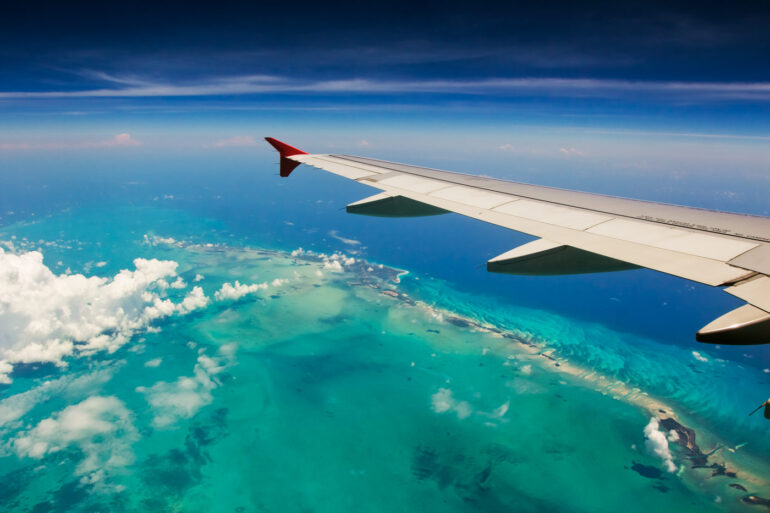
In travel photography, the difference between a hero shot and a missed opportunity is often just a few seconds. This is where a dedicated camera beats a smartphone every time. A system with fast startup times and physical buttons you can feel without looking makes capturing memorable travel shots a breeze. Whether you are shooting from an airplane window or capturing a local market, having your camera settings dialed in (like using Aperture Priority) ensures you are ready the second the scene unfolds.
My Top 4 Travel Camera Picks for 2026
Choosing a camera is deeply personal. While I’ve narrowed this list down to my top four recommendations, think of these as the best starting points for your search rather than the only options available. There are dozens of solid cameras on the market today that can all produce amazing travel photos.
To make these selections, I balanced three critical factors: weight, versatility, and modern features. I looked for systems that offer great sensors without the pro-grade bulk, ensuring they fit into a one-bag travel lifestyle. Whether you are looking for the feel of a street photography classic or the hybrid power of a vlogging powerhouse, these four represent some of the best value and performance for travelers right now.
1. The All-Rounder Mirrorless: Canon EOS R50
The Canon R50 is the modern successor to the compact DSLRs that defined travel photography for so many years. Unlike those earlier DSLR cameras which were heavy and bulky, the R50 is incredibly small and light, making it a perfect entry point into the mirrorless world. And — if you have a bunch of Canon EF lenses from your DSLR days like I do, grab an EF-EOS R Mount Adapter so that you can keep using them!

- High Image Quality: Canon EOS R50 4K digital camera features a 24.2 Megapixel CMOS (APS-C) sensor and...
- High-Speed Continuous Shooting: Capture fast action with up to 12 fps with Electronic First Curtain...
- Advanced Auto Focus: Dual Pixel CMOS AF II covers up to 100% x 100% area with 651 AF zones; features auto...
- Exceptional Low-Light Performance: Advanced A+ Assist offers an expanded array of auto-compatible scenes...
Pros: Excellent value, great autofocus, very light.
Cons: Lacks in-body stabilization (IBIS).
2. The Pocket Powerhouse: Sony RX100 VII
The Sony RX100 series has been a staple on It’s Just Light for many years—it’s one of my favorite camera lines of all time. After getting one to check out for a hands-on review, I fell in love with it and brought the RX100 III with me on a one-year travel photography adventure across the world in 2017, and it never let me down. Sony has released a further four models, and each one has introduced new features.
The Sony RX100 VII is the current pinnacle of the series, offering a massive 24-200mm equivalent zoom range in a body that truly fits in a jacket pocket. While some compacts struggle in low light, the RX100 VII features a high-performance one-inch sensor that produces remarkably clean images. For a deeper look at why this lineage is so special, check out my full Sony RX100 series guide.
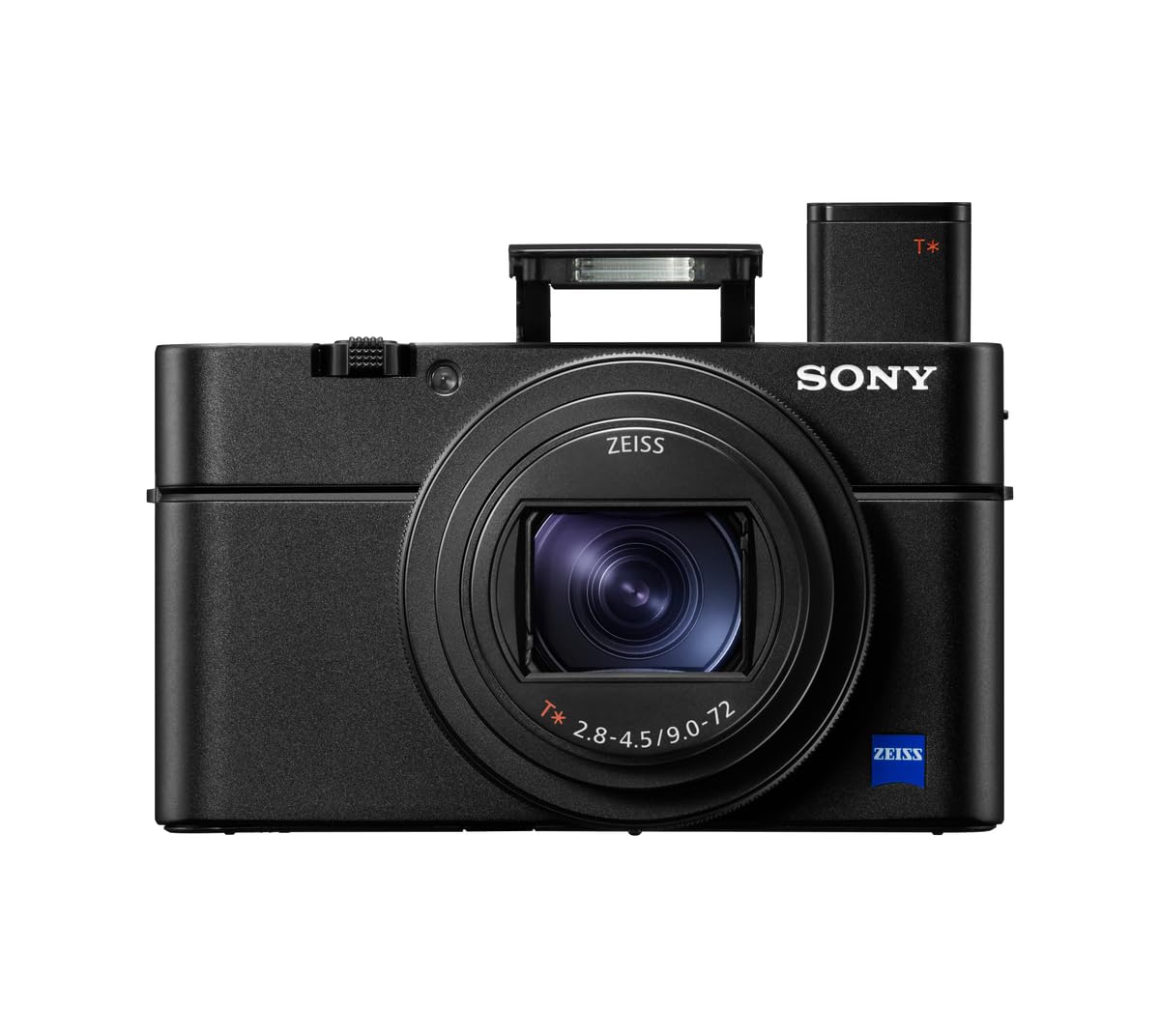
- 20. 1MP 1. 0 Type stacked CMOS sensor, Zeiss Vario Sonnar T 24 200 millimeter F2. 8 F4. 5 large aperture...
- 0. 02 sec. High AF speed, 357 point focal plane Phase detection AF and 425 point contrast detection AF
- Up to 20 fps blackout free shooting, using up to 60 times/sec. AF/AE calculations. Diopter Adjustment...
- AI based real time tracking for stills and movies, and touch tracking. Real time eye AF for human (stills...
Pros: Incredible 24-200mm zoom range in a pocketable frame; class-leading “Real-time Tracking” autofocus.
Cons: The longer lens means a slower maximum aperture compared to earlier models; battery life is limited due to the tiny form factor. However, because the batteries are small, it’s easy to bring extras to ensure you never run out of power.
3. The Hybrid Creator: Sony ZV-E10 II
If you find yourself shooting as much video as you do stills, the Sony ZV-E10 II is the current mid-range champion. What makes this camera such a hit: It shares the same 26MP sensor found in the Sony a6700. This means you’re getting pro-level image quality in a body that is significantly lighter and cheaper.
It features a vari-angle screen and a high-quality internal mic, making it the best choice for sharing high-quality reels and YouTube content alongside your photo gallery. To make the most of your travel content, check out my essential travel photography tips.

- Exmor R CMOS sensor: The ZV-E10 II features Sony's most advanced sensor technology in an APS-C...
- Interchangeable lenses to capture your vision : From the G Master series, which blends breathtaking...
- Create your look in camera: The Creative Look function makes it simple to create expressive moods for...
- Precise subject tracking with Real-time Eye AF: Real-time Eye AF recognizes—with high precision—the...
Pros: Shares the a6700 sensor; top-tier 10-bit 4K/60p video; compact design.
Cons: No electronic viewfinder (EVF); electronic stabilization adds a slight crop to video.
4. The Street Photography Specialist: Fujifilm X100VI
The Fujifilm X100VI is a cult classic (and often sold out) for a reason. Its fixed 35mm equivalent lens forces you to move your feet and think more about your street photography composition. With built-in film simulations, you can get beautiful JPEG results straight out of the camera, saving you hours of editing time.
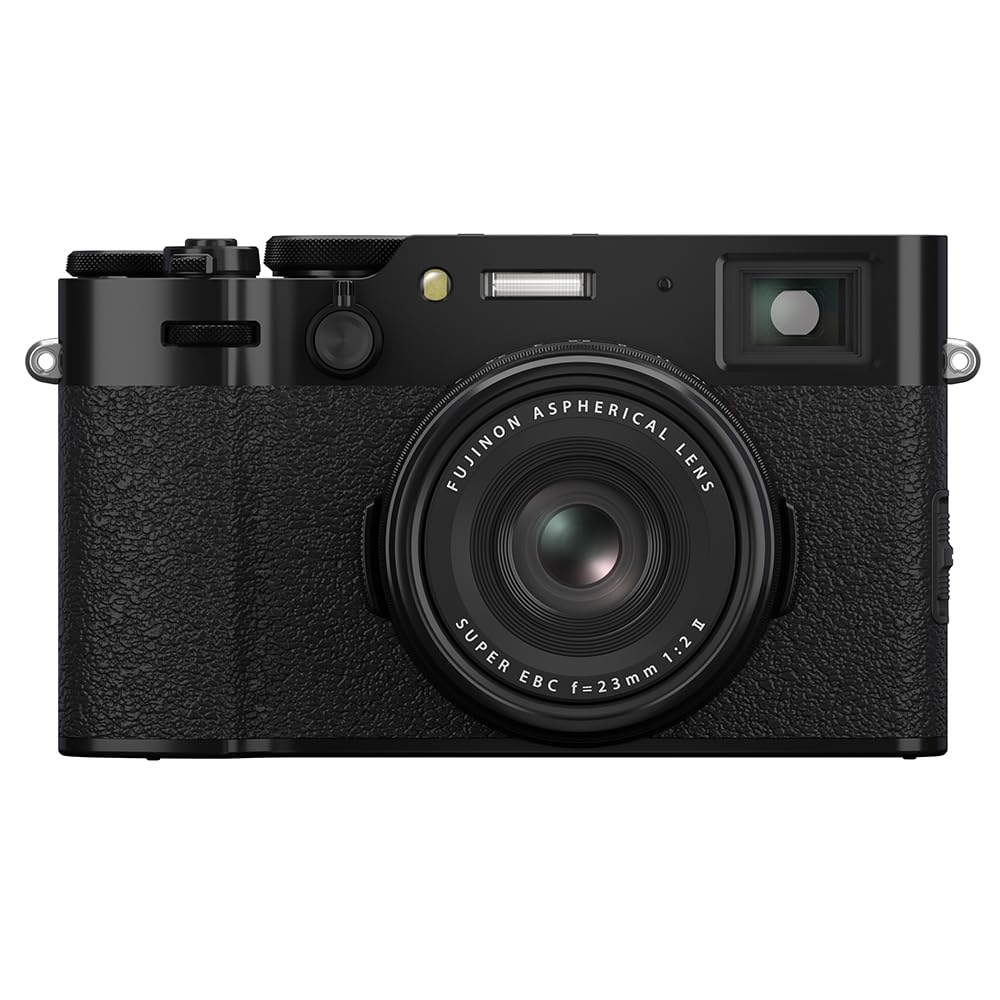
- When light is low and stakes are high, X100VI’s newly developed in-body image stabilization (IBIS...
- Confidently compose and view images using X100VI’s two-way tilting LCD. Featuring 1.62 million dots for...
- Frame images your way using X100VI’s hybrid viewfinder. Switch between the EVF, showing what the sensor...
- The optically precise 23mmF2 lens, borrowed from the X100V, perfectly complements the 40.2-megapixel...
Pros: Stunning design; built-in ND filter; legendary image quality.
Cons: A fixed lens isn’t for everyone — while it’s great for street-style travel photography, if you like having the ability to zoom in on distant subjects, this might not be the best option for you.
Beyond the Gear: Essential Travel Photography Skills
Buying a new camera is just the first step of many. To truly see a jump in your image quality, you need to develop real world skills that are ingrained in your muscle memory. As I’ve discussed in my ultimate travel photography guide, gear is secondary to storytelling.
1. Learn Your System Before the Airport
One of the biggest mistakes I see travelers make is unboxing a brand new camera the night before a big trip. Whether you’ve picked up the Canon R50 or the Sony RX100 VII or perhaps something else entirely, these are sophisticated tools with countless options. You don’t want to be fumbling with autofocus settings while a once-in-a-lifetime moment is happening right in front of you. Spend at least a week or two shooting around your neighborhood first. Mastering things like how to use Exposure Modes at home means you’ll be ready when you hit the streets of a foreign city, and can spend your time taking pictures, not learning how to use your new camera.
2. The Ethical Eye: Respect Over “The Shot”
As photographers, we have a real responsibility to the places and people we visit — the pictures we take influence others who follow in our footsteps. It’s easy to get caught up in “getting the shot,” but as I mention in my pro travel tips, no photo is worth compromising your ethics. Use common sense — if you wouldn’t do something in your own hometown, don’t do it in someone else’s. Be especially wary of tourist traps that exploit children or animals. Kids posing for money in colorful costumes during school hours at tourist sites? Elephants chained to a fence at a sad roadside zoo? Give these photo opportunities a miss.
3. Pack for the Destination, Not the “What Ifs”
It’s very tempting to bring every lens and accessory you own “just in case.” But weight really is is the enemy of creativity. Look at your destination research—if you’re hiking in Northern Norway, you’ll want that wide-angle lens and a sturdy, lightweight tripod for the landscapes. If you’re exploring the markets of Bangkok, you’re better off with a single prime lens or a high-end compact like the Fujifilm X100VI. Choose your gear based on what you know you will shoot, not what you might shoot.
4. Stay Safe and Stay Discrete
Finally, remember that gear safety is paramount. The best travel camera is the one that actually makes it home with you! I always recommend using a well-worn, nondescript bag. Keep an eye on your surroundings, and never leave your equipment unattended in a car. For more on this, check out my dedicated guide on staying safe while traveling with gear.
Ultimately, the gear you choose should empower you to tell the story of your journey. Whether camera you opt for, focus on the experience first and great photos will follow.